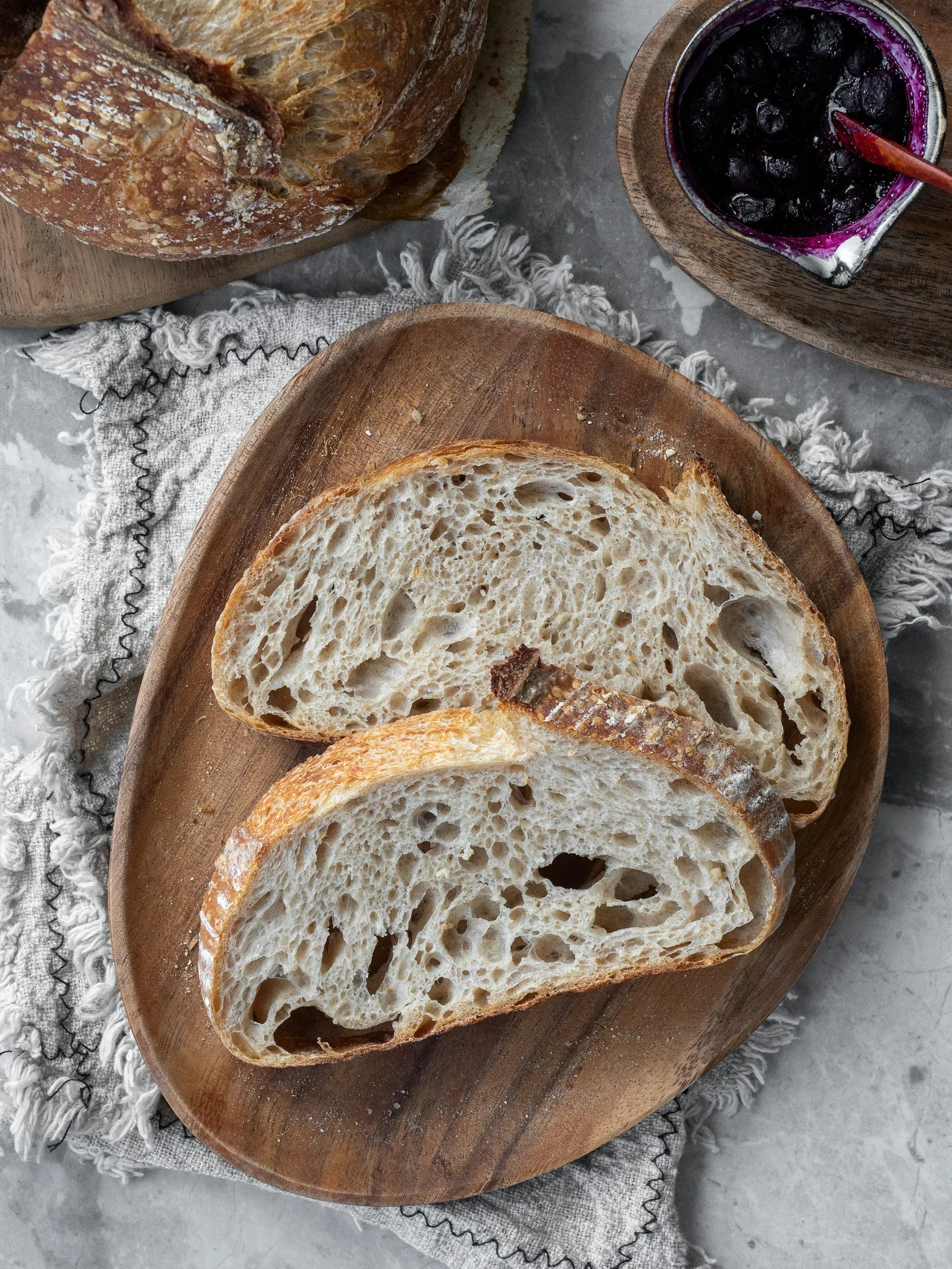
Refrigerate an established starter using a consistent maintenance method, label each feeding, and allow preparation time before baking. Cold storage reduces routine work but does not establish baking readiness.
- Keep maintenance starter and a recipe-specific levain clearly identified.
- Follow the entire chosen storage method, including its stage before refrigeration.
- Build the required quantity only after checking how the culture responds.
- Treat mold or pink or orange discoloration as a reason to discard.
Use the refrigerator for an established culture
Refrigeration is a way to organize the care of a mature starter when you bake less often. It is not a substitute for establishing the culture first, and it does not turn any jar of flour and water into a dependable baking ingredient. Before changing routines, confirm that your starter has a recognizable response to its usual refreshments. Write down that routine so you have a clear point of comparison when you later prepare it for bread.
Decide whether you want a separate maintenance jar or a single jar that also supplies each baking build. In the first arrangement, the refrigerator holds a small continuing culture and you take seed for a separate levain. In the second, you build enough for the dough and retain a portion afterward. Either plan needs an explicit reserve. The refrigerator solves a storage problem; it does not decide how much starter your recipe requires.
Choose a method before choosing a weekday
King Arthur's maintenance recipe gives a refrigerated routine with weekly refreshment and a room-temperature stage after feeding. Use the complete method you choose, including what happens before the jar returns to cold storage. Other published routines place that transition at a different point. Do not treat instructions from different methods as interchangeable simply because each mentions the refrigerator.
A weekday reminder can make the routine easier to remember, but the reminder should name the action. 'Starter day' is vague. 'Inspect, refresh according to the maintenance method, label, and return to storage at its specified stage' is actionable. If you bake frequently enough that the jar repeatedly moves in and out of the refrigerator, review whether the chosen method still matches your habits rather than constantly improvising around it.
Select a container and a known location
Use a food container you can mix in, inspect, and clean easily, with enough room for expansion. King Arthur's storage guide recommends a lidded vessel with substantial headroom and a refrigerator location that does not run warm. Place it where other food will not tip into it and where you can retrieve it without searching behind unrelated leftovers. A spill or an unlabeled transfer makes the next feeding harder to reconstruct.
Follow your method's cover instructions during room-temperature fermentation and storage; do not seal an actively fermenting culture in an unsuitable pressure-tight vessel. Keep the outside and rim clean so old spills do not obscure the jar's condition. Record the container's empty weight if you use subtraction to measure its contents, and update that number when you switch vessels. A jar plus a different lid may not have the same tare weight.
Record refrigerator conditions honestly
Check the refrigerator with an appropriate appliance thermometer rather than assuming the dial setting is a temperature reading. FDA food-handling guidance uses 40°F as a refrigerator safety reference. A household refrigerator's safe operating range and a starter's baking performance are separate questions: a culture can be stored cold yet still need preparation before it is useful in a particular dough.
Put the date, last feed, and intended next action on the jar. If you measured the storage temperature, record the reading and location; if you did not, leave that field unknown. Avoid filling it with a number copied from a recipe. When the appliance is heavily loaded, its door is frequently opened, or the jar is moved, note the change if you later need to explain a different response. Keep observations distinct from assumptions.
Size the maintenance jar from your actual needs
A smaller routine can reduce the amount you handle at each refreshment, provided the weights remain practical for your scale. King Arthur's smaller-starter article describes the distinction between maintaining a modest culture and increasing it for a bake. The useful planning question is how much seed your next build needs, not how large a jar looks impressive. A small amount with a clear history can be easier to manage than a crowded jar with unknown additions.
For a purely numerical example, retaining 20g and adding 20g flour plus 20g water produces 60g at 1:1:1. Retaining 50g and adding 50g of each produces 150g at the same ratio. This comparison does not establish a cold-storage interval for either batch. It shows that batch size and feeding proportion are different choices. Use your selected maintenance method for timing and observe how the culture responds when you prepare it for baking.
Keep a short storage handoff
Before putting the jar away, record the mixed quantity, feeding ratio, flour, hydration if known, and the stage specified by your maintenance method. A useful note might read '60g total after a 20:20:20 feed; returned according to the chosen routine.' Add the real date and observations, not hypothetical timings from this article. That note lets you identify what changed if the next retrieval looks different.
Do not add leftover levain to the maintenance jar automatically. It may have another flour blend, hydration, or feeding history. Returning it changes the contents you are trying to keep consistent. If you deliberately combine cultures or builds, record the quantities and composition. Otherwise, maintain one clearly identified routine and give leftover material a separate destination. This is especially helpful when several people share the kitchen or bake different recipes.
Prepare for baking before the mixing window
Read the bread recipe before retrieving the starter. Does it request ripe starter at a particular hydration, or is it explicitly written for another condition? The amount in the cold jar is not automatically the amount you should put in the dough. For recipes calling for ripe starter, follow a preparation routine and observe its response before scheduling the final levain build. Leave room for another refreshment if the culture does not behave as expected.
Do not measure success only by whether you completed a prescribed number of feeds. Compare the rise pattern with your starter's familiar behavior, and verify that the actual build matches the recipe's requirement. A culture returning from a longer gap may not follow the same timetable as one used regularly. If the planned mixing window closes before you have suitable starter, postpone the dough instead of assuming extra seed will compensate for uncertain readiness.
Work through a weekend quantity plan
Suppose Saturday's dough needs 180g levain and your maintenance culture is kept separately. A 1:2:2 baking build totaling 180g uses 36g seed, 72g flour, and 72g water. Check that the maintenance routine can provide 36g seed while preserving whatever portion you intend to continue. The calculation does not tell you when to take the seed or how quickly the new build will develop.
If instead you want the same build to supply 180g dough starter and a 20g reserve, the target becomes 200g. At 1:2:2, use 40g seed and 80g each flour and water. These two plans differ by the reserve, not by the bread requirement. Write the arrangement on the jar so you do not add a second reserve by mistake or pour the entire culture into the mixing bowl.
| Plan | Dough requirement | Reserve in this build | Target total | 1:2:2 weights |
|---|---|---|---|---|
| Separate maintenance jar | 180g | 0g | 180g | 36g seed + 72g flour + 72g water |
| One shared build | 180g | 20g | 200g | 40g seed + 80g flour + 80g water |
Inspect changes without treating every change as a diagnosis
A separated liquid layer and visible mold are different observations. Colorado State University Extension describes an alcohol-smelling liquid layer as a possible feature of stored starter; it also directs bakers to discard contaminated culture. Do not use the existence of one harmless explanation to dismiss every unfamiliar surface change. Check the jar before stirring so you do not erase the evidence you need to assess it.
For mold or pink or orange discoloration, discard the starter and clean the equipment; do not try to feed it back into use. If you cannot distinguish an unusual film from contamination, do not rely on a generic photograph as clearance. A missed maintenance date is a scheduling issue. A contamination sign is a stop condition. Keeping those categories separate prevents a 'revival' plan from becoming an excuse to retain a questionable culture.
If a maintenance date was missed
Record the gap and inspect before attempting another refreshment. If there are no contamination signs and the culture's history is otherwise known, use a documented revival or preparation method rather than immediately treating it as ready levain. A successful return means observing a dependable response again; feeding once is an action, not proof of recovery. Do not attach a guaranteed recovery time to an unknown storage history.
Review why the date was missed. Perhaps the jar was hidden, the batch was too large to handle conveniently, or the reminder did not specify what to do. Fixing that practical problem may matter more than changing flour. If your routine includes frequent travel, plan an appropriate backup method before leaving and follow its own instructions. An indefinite refrigerator stay is not a complete backup plan simply because mature cultures can sometimes survive neglect.
Keep discard, maintenance starter, and levain distinct
Give separate containers clear purposes. The maintenance culture is the portion you intend to continue. Levain is a build prepared for a particular bake. Discard is material removed during feeding and is not automatically equivalent to either of them. If a recipe calls for discard, follow that recipe and use only suitable material from a known culture; do not use contaminated or questionable leftovers to avoid waste.
Do not taste raw starter or dough to decide which container it belongs in. FDA guidance treats flour as a raw ingredient requiring appropriate cooking. Write the dates and contents on any retained material and avoid an accumulating anonymous jar. Quantity planning upstream is more manageable than continually searching for recipes to consume excessive surplus. Keeping the categories explicit also makes hydration and flour accounting much easier when you adapt a formula.
Evaluate the routine after a few baking cycles
After using the refrigerated routine several times, review the practical results. Can you retrieve the jar easily? Do the actual feed quantities match the plan? Is there enough preparation time before baking? Are you regularly producing more than you use? These questions identify specific adjustments. A storage method is useful when it supports a manageable cycle of maintenance and baking, not merely when a jar remains somewhere in the refrigerator.
Change one logistical variable at a time where possible. You might reduce the maintenance batch while keeping its ratio, move the reminder earlier in the week, or separate the levain build from the storage jar. Record the change and compare the next cycle. Keep biological observations alongside those logistical decisions, because a convenient schedule still has to produce starter appropriate for the recipe. The aim is less guesswork each time you open the refrigerator.
Sources & further reading
This guide combines published references with our own explanations and decision aids. Numerical examples are illustrative; they are not records of Sourdough Bench test bakes.
- King Arthur Baking: How to store sourdough starter
- King Arthur Baking: Feeding and Maintaining Your Sourdough Starter
- King Arthur Baking: Maintaining a smaller sourdough starter
- Colorado State University Extension: Sourdough Starter Best Practices
- King Arthur Baking: Sourdough FAQ
- FDA: Handling Flour Safely
Put it into practice.
Keep the recipe, observations and next change together in your downloadable bake log. For a symptom-led starting point, use the loaf troubleshooting guide.