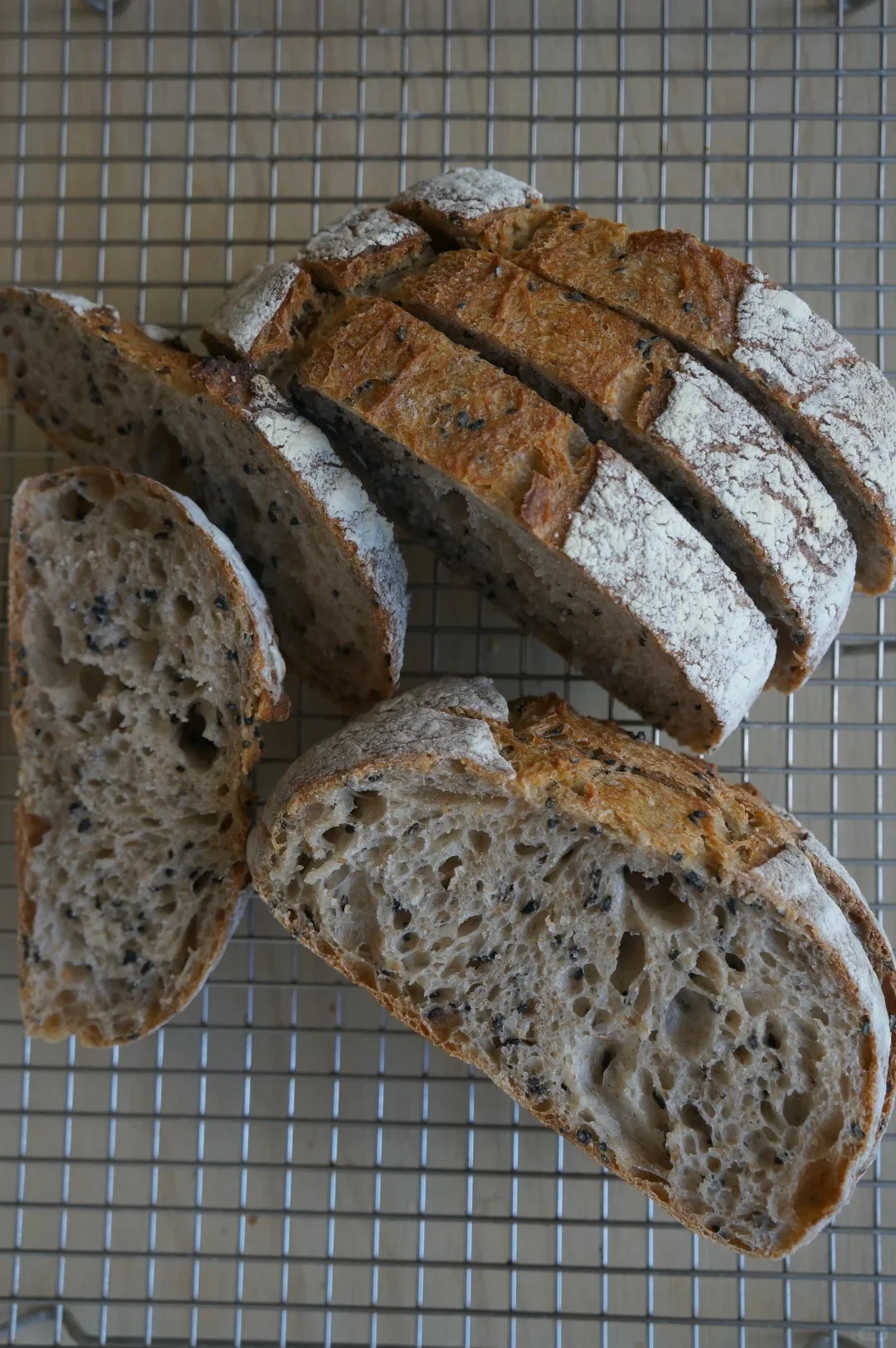
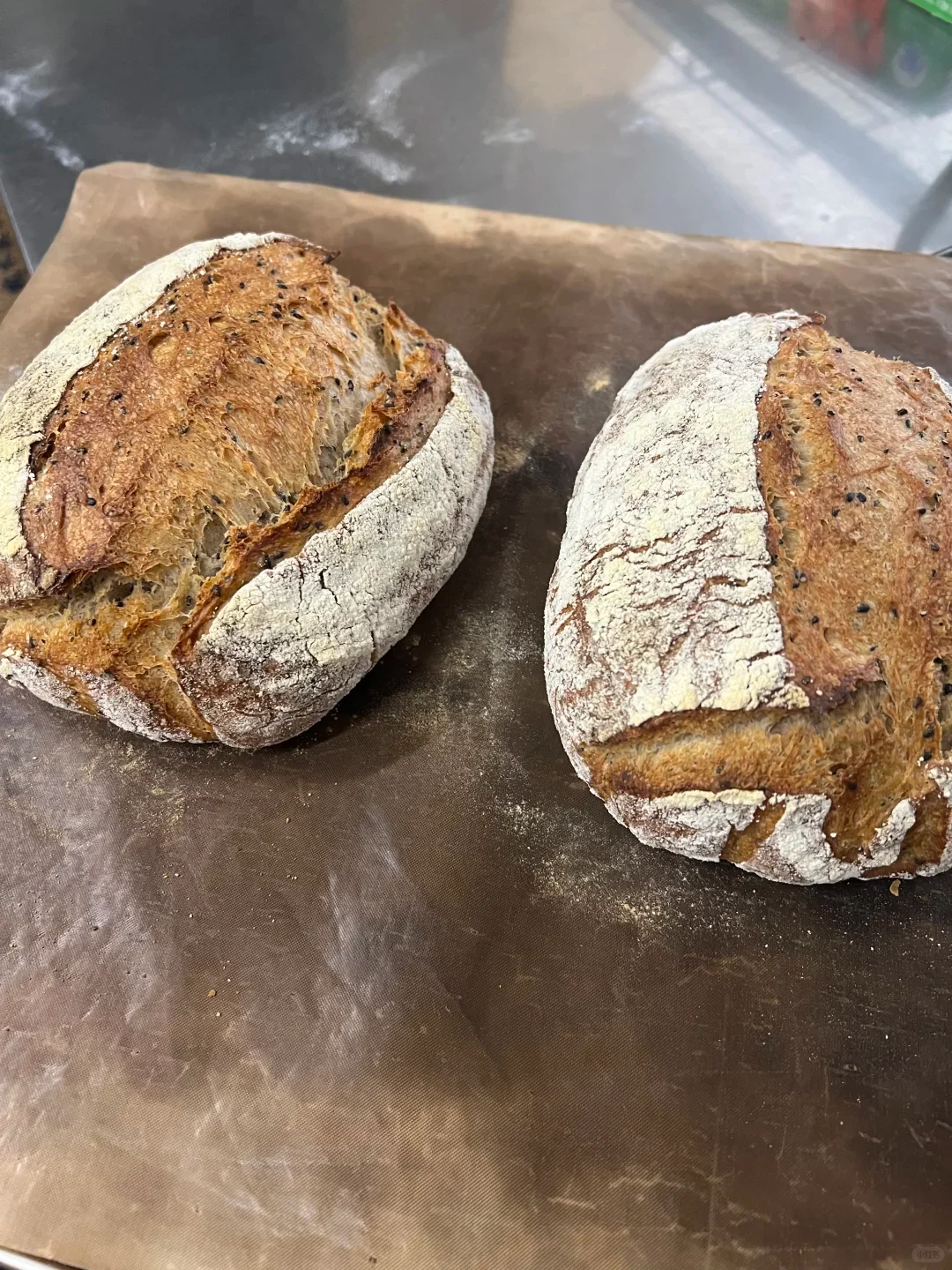
Into the bowl.
- King Arthur bread flour
- 259 g
- King Arthur all-purpose flour
- 41 g
- Water
- 250 g
- Levain / sourdough starter
- 90 g
- Sea salt
- 6 g
646 g total dough · Add the salt at 08:53.
- Added flour
- 300 g
- Mix to shaping
- 6 h 40 min
- Fold sets
- 7
The day at a glance.
- MixBring the dough together. Initial temperature: 25.6°C.
- Stretch & foldTwo sets, with a rest between them.
- Add the saltWork it in evenly, then let the dough rest.
- Coil foldsFive sets through the morning.
- Leave it aloneNo more folds; 65 minutes of undisturbed rest.
- ShapeBulk fermentation ends. The final proof begins.
Open the complete dough log18 entries · all temperatures & rests
24-hour times. Temperatures are recorded dough readings; a dash means no reading was supplied.
| Time | Step | Dough | Recorded rest / note |
|---|---|---|---|
| Begin mixing the dough. | 25.6°C | Initial dough temperature. | |
| Fold 1: stretch-and-fold set 1. | 24.4°C | Rest for 38 minutes. | |
| Fold 2: stretch-and-fold set 2. | 24.4°C | Rest for 20 minutes, as recorded. | |
| Bulk fermentation: hour 1 marker. | — | Hourly marker in the original log. | |
| Add the salt and work it in evenly. | — | Rest for 30 minutes. | |
| Bulk fermentation: hour 2 marker. | — | Hourly marker in the original log. | |
| Gather the dough into a tidy round / “formal fermentation” begins. | 23.3°C | Wording retained from the supplied notes. | |
| Fold 3: coil-fold set 1. | 23.9°C | Rest for 40 minutes. | |
| Bulk fermentation: hour 3 marker. | — | Hourly marker in the original log. | |
| Fold 4: coil-fold set 2. | 25.0°C | Rest for 40 minutes. | |
| Bulk fermentation: hour 4 marker. | — | Hourly marker in the original log. | |
| Fold 5: coil-fold set 3. | 25.0°C | Rest for 37 minutes. | |
| Fold 6: coil-fold set 4. | 23.9°C | Rest for 40 minutes. | |
| Bulk fermentation: hour 5 marker. | — | Hourly marker in the original log. | |
| Fold 7: coil-fold set 5. | 22.2°C | Leave the dough undisturbed from this point until shaping; no further folds. | |
| Bulk fermentation: hour 6 marker. | — | Hourly marker in the original log. | |
| Shape the dough; begin the final proof. | — | The final-proof stage starts here. | |
| Bulk fermentation ends. | — | A separate closing entry in the original log. |
The original times and rests are preserved. At 08:28, the recorded rest is 20 minutes; the next handling step, 08:53, is 25 minutes later.
The hourly bulk markers count from 07:30. The 09:33 “formal fermentation” label and both 14:10 entries are retained as written.
This log ends at shaping. Use it alongside a complete baking method for the final proof and oven stages.
How the hydration adds upThe flour and water inside your starter count, too.
A little dough maths.
Added water ÷ added flour is 250 ÷ 300 = 83.3%. That excludes the levain, so it is not total dough hydration.
If the levain is 100% hydration, its 90 g contributes 45 g flour and 45 g water:
Total flour: 300 + 45 = 345 g
Total water: 250 + 45 = 295 g
Hydration: 295 ÷ 345 × 100 = 85.5%
The levain hydration was not supplied. 85.5% is a conditional calculation, not a confirmed measurement of this bake.
On that same basis, salt is 1.74% of total flour and prefermented flour is 13.0%. Using only the 300 g added flour instead gives 30% levain and 2% salt. Always name the flour basis.
Notes & sources
Adapted from contributed baking notes. The complete supplied photographs are retained, including original markings; photographer and original publication details were not supplied.
The levain’s flour, hydration and feeding history, any inclusions, final-proof conditions, oven settings, baking and cooling times, and loaf count were not recorded. The dark flecks in the photos are not identified in the formula. These images are accompanying material, not Sourdough Bench test results.
The nine dough readings range from 22.2°C to 25.6°C. Seven folds describe this bake’s schedule; the handling and endpoint for your dough depend on its formula and development.
- How to read bulk fermentation signs
- Stretch-and-folds and coil folds
- King Arthur Baking: Bulk fermentation
- King Arthur Baking: Desired dough temperature
Our editorial approach · Flour brand names identify the supplied ingredients; no affiliation is implied.