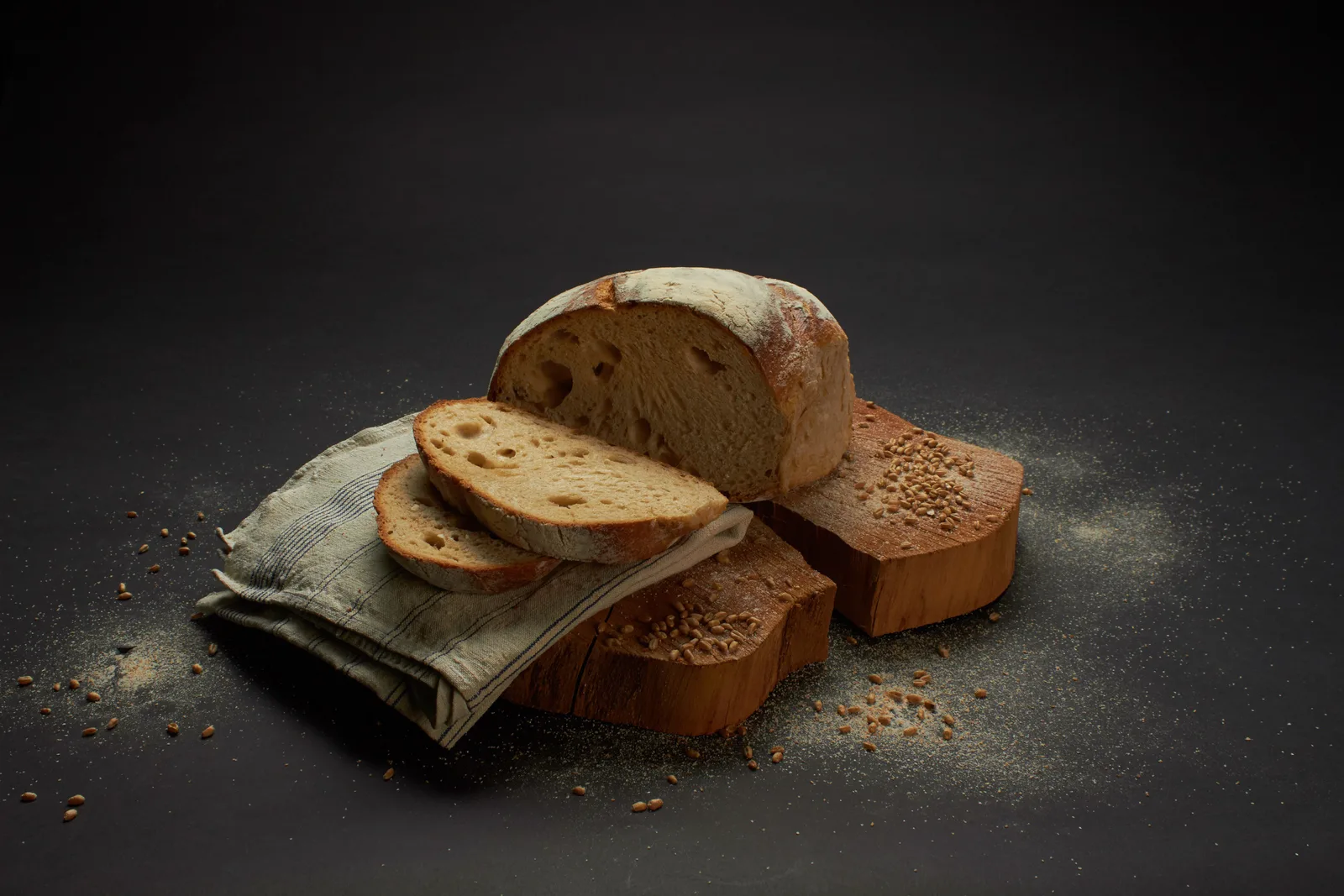
Choose flour that matches your recipe and bread style, then keep the product consistent while learning its behavior. Include levain flour when calculating blends, and test substitutions as deliberate changes.
- Read grain type, whole-grain content, ingredients, and product specifications.
- Use protein as context rather than a complete performance score.
- Count flour carried in the levain when calculating the overall blend.
- Change one major ingredient variable at a time when comparing flours.
Choose flour for the bread you intend to make
Begin with a recipe whose finished loaf matches your goal, then choose the flour it specifies. A soft sandwich loaf, a moderately open country loaf, and a dense rye bread ask different things of their ingredients and method. The highest protein number or the most expensive bag is not automatically the best choice for all three. A flour decision becomes easier when you first decide which bread you actually want to eat and which handling method you are prepared to follow.
For a first repeatable sourdough routine, favor a flour you can buy consistently in a useful package size. Keep the product name with your formula. If the ingredient list says bread flour and your bag says something else, treat that as a substitution to investigate rather than silently renaming the ingredient. Consistency gives you a baseline; after that, you can make a deliberate change and evaluate its effect.
Read more than the large name on the bag
Look for the grain, whether it is whole or refined, intended use, ingredient list, and any published technical information. A flour blend may contain more than the grain pictured on the front. Self-rising flour includes ingredients that do not belong in a straightforward substitution for plain wheat flour. A mix intended to produce a complete bread is also different from a bag of flour, even when both have the word sourdough on the label.
Save a photograph of the package when changing suppliers. Product names can be similar while specifications differ. If the manufacturer provides a protein specification, use it as context; a rounded nutrition panel is not always an equally precise technical specification. Do not infer missing information from the package color, price, or a marketing phrase. If an exact match is unavailable, choose a recipe developed for the flour you can obtain instead of making several hidden substitutions.
Compare the main options by their role
King Arthur's flour guides distinguish all-purpose flour from bread flour principally through their intended use and protein characteristics. Whole wheat includes parts of the grain removed from refined white flour, while rye is a different grain with different dough behavior. Those distinctions help explain why the same water percentage and handling routine need not produce the same dough across several bags.
Use the table to decide which question to ask next, not to rank the flours from best to worst. A bread made with all-purpose flour can be an intentional recipe, not a failed attempt to use bread flour. A rye-forward loaf should not be judged only by whether it resembles a white wheat boule. Product choice and bread style belong together.
| Flour | Useful starting question | Substitution caution |
|---|---|---|
| All-purpose wheat | Does the recipe specify this product or a comparable one? | Protein and performance vary by product |
| Bread wheat | Does the method need its intended dough strength? | Higher protein is not a universal quality ranking |
| Whole wheat | What share of total flour should be whole grain? | Do not assume white-flour water and handling stay identical |
| Rye | Which milling type and grain share does the method use? | Rye and wheat do not behave interchangeably |
| Prepared flour blend | What grains and additives are already included? | Undisclosed proportions limit exact blend calculations |
Use protein as a clue, not a complete performance score
Within comparable wheat flours, protein information can help you understand differences in dough development and water demand. King Arthur's bread-flour comparison demonstrates that substituting all-purpose flour changes handling and results in its tested formulas. That does not mean every bread-flour brand behaves identically or that a one-point protein difference predicts an exact loaf height. Flour processing, grain characteristics, recipe, and handling remain part of the situation.
A weighted protein calculation is only an approximate label comparison. Mixing 450g flour labeled 12% protein with 50g labeled 14% gives (450 × 12 + 50 × 14) ÷ 500 = 12.2% nominal protein. It does not create a flour proven equivalent to another manufacturer's 12.2% product. Use the number to describe the blend, then evaluate the actual dough. Avoid treating the arithmetic as a substitute for baking evidence.
Distinguish starter flour from final-dough flour
The flour used to maintain your starter does not have to be the only flour in the bread recipe, but it contributes to the final composition. A white-flour starter brings white flour into a dough even if every fresh addition is whole wheat. If you need an exact overall blend, include that carried flour. If you only want a practical loaf with a small whole-grain addition, record the approximation honestly.
For example, 100g of 100% hydration white-flour starter contains 50g flour and 50g water under ordinary ingredient accounting. Combined with 400g white flour and 100g whole wheat, the total flour is 550g and the whole-wheat share is about 18.18%. It is not 20%, because the starter increases the denominator. That difference is easy to miss when a recipe lists starter as a separate ingredient.
Plan an overall blend before weighing additions
Suppose you want 500g total flour with 20% whole wheat and 80% white wheat. The totals are 100g whole wheat and 400g white flour. If a 100g white-flour starter supplies 50g of the white flour, the fresh additions are 100g whole wheat and 350g white flour. The total remains 500g. This is a formula-accounting example, not a complete recipe or a tested dough recommendation.
The same method works for three flours. For 500g total at 70% white wheat, 20% whole wheat, and 10% whole rye, the targets are 350g, 100g, and 50g. Subtract each grain's known contribution in the levain before weighing the fresh flour. If that contribution is unknown, label the blend approximate rather than displaying an exact whole-grain percentage that the inputs cannot support.
Expect hydration to describe quantity, not identical feel
Hydration is a ratio of water to flour, so its calculation stays the same when you change flour. Its physical meaning is not a promise that two mixtures will feel alike. King Arthur's hydration guide explains that whole-grain and refined flours can differ in their water requirements. Record both the percentage and the flour identity. 'Seventy percent hydration' without a flour context is incomplete handling advice.
When adapting an existing formula, avoid a large flour substitution and a large water change in the same first trial. Keep a known reference and make a manageable comparison. If the recipe permits holding some water back, record how much was reserved and how much eventually entered the dough. Any unused water changes the actual hydration. A note saying '350g planned, 335g added' is more useful than continuing to label the dough with the planned percentage.
Compare substitutions in a small, structured trial
Choose one question: can a locally available all-purpose flour replace the bread flour in this recipe with acceptable handling and eating quality? Use the same batch size and method as your reference, and record the substitution clearly. Keep starter preparation and other ingredients comparable where practical. Do not simultaneously switch to a much higher hydration or a different shaping method, because that makes the result harder to interpret.
Judge the bread against your original goal. For sandwich bread, sliceability and your preferred texture may matter more than a dramatic open crumb. For a free-standing loaf, handling and shape may be important. Write observations before deciding whether the new flour is a useful replacement. A substitution that produces a different but enjoyable bread may deserve its own saved formula rather than a verdict that one flour is universally superior.
Introduce whole grains by a measured proportion
A small, measured addition lets you learn the flour without abandoning a familiar formula. Choose an intended share of total flour and calculate it, rather than adding a handful on top. Replacing 50g of a 500g flour total produces a 10% share before accounting for any levain contribution. Adding 50g to an existing 500g produces 550g total and a different percentage, while also changing the amounts of salt and water relative to flour.
Do not confuse whole-grain flakes, coarse meal, and fine flour. Their roles in a recipe may differ, and a method using a separate soaking stage is not the same as replacing flour directly. For substantial whole-wheat or rye changes, select a formula written for that grain proportion. The related whole-wheat and rye guide develops the accounting and method questions in more detail.
Check rye labels with particular care
King Arthur's rye-flour guide notes that white, medium, dark, and whole rye labels can refer to different milling fractions, and dark rye naming is not fully consistent between producers. Check the manufacturer's description if your goal is a known whole-grain share. Color alone cannot establish the composition. A dark-looking loaf can also get color from ingredients other than the flour.
A commercial rye blend may already include wheat flour. Treat it as a blend unless its composition is documented, and do not count every gram as pure rye automatically. If the proportions are undisclosed, you can still follow a recipe developed for that product, but your own calculated rye percentage has limits. Keep the product name in the recipe instead of replacing it with the generic word rye.
Buy quantities that support useful comparison
Estimate consumption before buying a large bag. If your normal bake uses 500g total flour and you bake twice a week, the bread itself uses about 1kg weekly, plus starter refreshments and other baking. A 5kg bag therefore represents about five weeks of bread flour in that hypothetical routine, not including those other uses. This is a shopping calculation, not a storage-life recommendation; follow the manufacturer's storage and date guidance.
Compare cost per usable mass rather than package price alone. In a hypothetical example, a 1.5kg bag costing 6 currency units is 4 per kilogram, while a 5kg bag costing 18 is 3.6 per kilogram. The larger bag saves money per kilogram only if you use and store it appropriately. A cheaper unfamiliar flour that forces several simultaneous recipe changes may not be the most convenient starting point for learning.
Store the information with the flour
When transferring flour to a container, retain the product identity, lot or date information, and any relevant package instructions. Do not top an old container with a new product and continue calling it the original flour. That creates an unrecorded blend and makes it difficult to compare bakes. An inexpensive label can preserve more useful information than a later attempt to diagnose dough from memory.
Use clean, dry handling tools and follow the product's storage guidance. The FDA reminds home bakers that flour is a raw ingredient and should not be tasted uncooked. Keep the work area and ready-to-eat foods separate from flour dust and clean after handling. These ordinary habits support a usable ingredient routine without requiring an elaborate pantry system or unsupported promises about shelf life.
Save the decision as a usable formula
After a few comparable bakes, decide whether the flour belongs in your regular routine and write the actual formula that worked for you. Include the flour blend, overall hydration, levain composition, and any consistent method adjustment. Keep a separate note for personal preference. 'Preferred this flour for sandwich slices' is a clear conclusion; 'this flour is best for sourdough' claims far more than the comparison established.
Revisit the choice when the product changes or your bread goal changes. A dependable flour for one loaf does not need to serve every style. Keeping two clearly understood ingredients can be more useful than collecting many partially used bags. The practical result of choosing flour well is a formula you can reproduce and explain, with changes that are deliberate rather than hidden in the ingredient list.
Sources & further reading
This guide combines published references with our own explanations and decision aids. Numerical examples are illustrative; they are not records of Sourdough Bench test bakes.
Put it into practice.
Keep the recipe, observations and next change together in your downloadable bake log. For a symptom-led starting point, use the loaf troubleshooting guide.